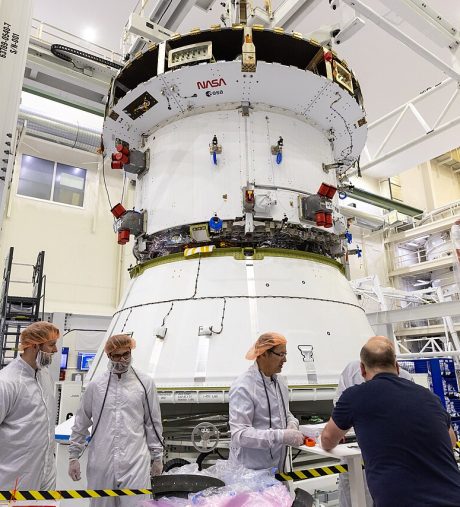
Artemis III launch is set for 2027, promising to return humans to the Moon. This mission represents a major leap in space exploration and technology.
Overview of Artemis III Mission
The Artemis III mission represents a significant milestone in NASA’s efforts to return humans to the Moon. Scheduled for launch in 2027, it aims to land astronauts at the lunar South Pole, a region that has remained largely unexplored. This mission not only seeks to establish a sustainable human presence on the Moon but also serves as a stepping stone for future Mars exploration.
One of the primary objectives of Artemis III is to demonstrate new technologies and capabilities necessary for long-duration lunar missions. The mission will utilize the Space Launch System (SLS) rocket and the Orion spacecraft, both designed to support deep space travel. The astronauts selected for this mission will include the first woman and the next man to set foot on the lunar surface.
The Artemis program emphasizes collaboration between various organizations and international partners, fostering a spirit of teamwork in space exploration. As part of the mission, astronauts will conduct scientific research and experiments to better understand the Moon’s resources, geology, and potential for future habitation.
In summary, the Artemis III launch is not just about landing on the Moon; it is a pivotal step towards a future where humans can explore and utilize the resources of our celestial neighbor, paving the way for further adventures beyond our planet.
Key Objectives for the 2027 Launch
The upcoming Artemis III launch is set to mark a significant milestone in lunar exploration. NASA has outlined several key objectives that will guide the mission and ensure its success. These objectives not only aim to enhance our understanding of the Moon but also pave the way for future missions to Mars and beyond.
- Human Landing: One of the primary goals of Artemis III is to land astronauts on the lunar surface, specifically near the lunar South Pole. This region is believed to hold valuable resources, including water ice.
- Scientific Research: The mission will focus on conducting scientific experiments that can provide insights into the Moon’s geology and its history. This research is crucial for understanding the evolution of celestial bodies.
- Technology Demonstration: Artemis III will serve as a testbed for new technologies that will be essential for long-duration space missions. These technologies are aimed at enhancing human safety and operational capabilities in space.
- International Collaboration: NASA aims to work closely with international partners, enhancing global cooperation in space exploration. This collaboration will foster shared knowledge and resources.
As the launch date approaches, the initiatives tied to the Artemis III mission promise to redefine humanity’s presence on the Moon and set the stage for future explorations of the solar system.
Technological Innovations in Artemis III
The Artemis III launch represents a significant leap forward in lunar exploration, driven by a series of technological innovations designed to enhance mission safety and efficiency. These advancements reflect NASA’s commitment to not only return humans to the Moon but also to establish a sustainable presence for future missions.
One of the key innovations is the development of the Orion spacecraft, which features advanced life support systems and improved navigation capabilities. This spacecraft is designed to carry a crew of astronauts into lunar orbit, ensuring a safe journey to and from the Moon.
Moreover, the Space Launch System (SLS), which will propel Artemis III into space, showcases cutting-edge propulsion technologies. The SLS is the most powerful rocket ever built, allowing for increased payload capacity and greater flexibility in mission design.
Additionally, NASA is implementing next-generation lunar landers that are engineered for precision landing on the lunar surface. These landers will enable astronauts to explore diverse regions of the Moon, expanding our understanding of its geology and resources.
Finally, advancements in communication technologies will ensure seamless connectivity between the crew and mission control on Earth. This will facilitate real-time data sharing, enhancing decision-making and operational efficiency during the Artemis III launch and subsequent missions.
The Importance of Lunar Exploration
Lunar exploration has always held a significant place in the advancement of space science and technology. The upcoming Artemis III launch represents a crucial step towards not only returning humans to the Moon but also establishing a sustainable presence there. This mission is expected to enhance our understanding of the Moon’s resources, which could have far-reaching implications for future space travel.
One of the primary motivations behind lunar exploration is the potential for scientific discoveries. The Moon serves as a time capsule, preserving the history of our solar system. By studying its geology and surface, scientists can gain insights into planetary formation and evolution.
Additionally, the Moon offers valuable resources, such as water ice, which could support long-term human habitation and fuel production for deeper space missions. This capability is essential for future endeavors to Mars and beyond, making the Artemis program a pivotal component of human space exploration.
Moreover, lunar exploration fosters international collaboration, as nations come together to share knowledge and resources. The Artemis III mission will demonstrate how cooperative efforts can lead to significant achievements in space exploration.
In summary, the importance of lunar exploration cannot be understated. The Artemis III launch not only paves the way for further scientific research but also establishes a foundation for humanity’s journey into the cosmos.
Future Missions Beyond Artemis III
The Artemis III launch is not just a pivotal moment for lunar exploration; it also sets the stage for future missions that aim to expand our reach into the solar system. As NASA prepares for this monumental event, the agency is already considering the next steps beyond Artemis III.
Future missions will likely build on the technologies and knowledge gained from the Artemis program, with a focus on:
- Establishing a Lunar Base: Following the Artemis III launch, NASA plans to establish a sustainable presence on the Moon, which will serve as a launchpad for deeper space exploration.
- Human Missions to Mars: Insights gained from lunar missions will be crucial for preparing astronauts for the challenges they will face on Mars.
- Asteroid Exploration: Future initiatives may include missions targeting asteroids, allowing scientists to gather data that can help us understand the origins of our solar system.
- International Collaboration: Building partnerships with other countries will be essential for sharing knowledge, resources, and technology in upcoming missions.
These ambitious goals underscore the long-term vision of NASA and its partners, highlighting that the Artemis III launch is only the beginning of a new era in space exploration. The future is bright, and the Moon is just the first stop on a journey that promises to unlock the mysteries of our universe.
The Artemis III launch marks a significant milestone in humanity’s return to the Moon, paving the way for future exploration. As we prepare for the Artemis III launch, excitement grows about the possibilities that lie ahead in lunar research and discovery.
via Wikimedia Commons